An open letter to our friends
Turning Darkness Into Light
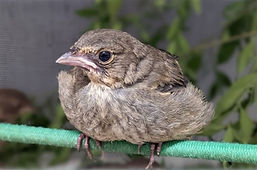
Dark days. We’ve all had them. The kind where nothing goes according to plan. Big things, small things, life-altering things, everything seems beyond our control. There’s even a movie called The Terrible, Horrible, No Good, Very Bad Day. That perfectly describes February 15th, 2026 for one California Towhee. It began with an unscheduled flight inside a local home. He struck a window while trying to escape, then was caught by the family cat only to end up stuck in a sticky trap meant for rodents. The finders attempted to release him from the sticky trap using olive oil, then brought him to BRC because things were definitely not looking good. Most of the birds who find their way to us are having days that are ‘so not good’.
Most are in pain, many in shock, and a few are barely clinging to life. We aren’t able to save them all, but none of them would survive without our help—and a lot of them do get a second chance to fly free.
The towhee’s initial exam was brief, yet revealing. He was highly stressed, dehydrated and, being covered in oil, wasn’t able to thermoregulate. Most of his flight feathers and a good portion of his body feathers were missing; he had skin irritation and bruising on most of his little body; and his left foot was tightly bound with hair which was constricting blood flow. It was clear he wouldn’t be able to tolerate much more stress, so he was gently freed from the constricting hair, given pain medication, antibiotics to ward off infection, fluids, oxygen, and heat, then given time to decompress and de-stress.
It took a full 48 hours for our little towhee to stabilize enough to tolerate bathing. While most of us might view a nice warm bath as a relaxing escape, to wildlife it is a stressful experience—especially when we are trying to remove sticky adhesives and contaminants from feathers or fur. Our towhee was less than pleased, however he was able to tolerate the process without too much additional stress.
A week later, clean once more, we were able to confirm all his remaining feathers were in good condition. His lungs were clear and most of the bruising had resolved. He was still experiencing some minor inflammation, but things were starting to look up. A week’s worth of effort—what must have seemed like a lifetime to him—but there was a light at the end of the tunnel. The darkness was receding.
Bringing birds in need to our hospital for care is the beginning of a life-saving journey that otherwise might not happen. Funding that care creates a path to recovery and an opportunity for them to resume their vital role in creating a healthy environment, and in maintaining this beautiful place we call home.
What an amazing partnership!
With all my heart,
Perspective
This little California Towhee was our 96th patient of the year. As I write this letter, he remains in care, regrowing feathers and waiting impatiently to return to the wild. By the time you read this, the number of birds we’ll have received for care will be closer to 500 and our towhee will hopefully be back in the wild. Come September, as Baby Bird Season draws to a close, we will be nearing 2,000 birds. Every bird who comes to us needs help. For some it’s simply a safe haven with plenty of food where they can heal and grow. For others it’s significant medical intervention. And for all of them, regardless of the outcome, we give our best—our time, effort, patience and know-how. Yet none of this would be enough if it wasn’t for your unwavering support. You, our local communities, our flock, are the silent partners who make every recovery possible.
The Trouble with Towhees
While many consider the California Towhee rather unremarkable, anyone who has witnessed the Towhee Two-step will heartly disagree! Yet towhees are among the most challenging of species to treat in a rehabilitaton settng. They stress easily and frequently, they just plain refuse to eat. Successfully caring for them requires a Towhee Whisperer—someone with infinite patience who has mastered the art of gently coaxing these difficult patients to eat.
In 2018, BRC began an intense research project aimed at improving the survival rate for this species and, as a result, developed a new protocol for their care and feeding. This was so successful, it increased the
survival rate to more than an 80%, even after days like the one this towhee experienced!
As a result, this new BRC protocol has been published in the primary reference textbook used by rehabilitators all around the world.
Like a beacon of light, your gifts reach far beyond the walls of our Quonset hut, soaring with every bird who gets a second chance to fill our skies.

Ashton Kluttz
Executive Director
P.S. As with this little towhee, most of our patients arrive on the darkest day of their lives. Your gift today is the light that pierces the darkness and brightens their world, and ours. Please give generously.